Welcome back siblings. I had a horrible fever dream, as if millions of voices suddenly cried out in terror at the lack of a meaningful Update last week and were suddenly silenced. I woke in a cold sweat, and when I waked I cried to dream again because – does this make me a bad person? – whisper it… I kind of liked it.
But what did I like? Did I like the terror? The freedom of having no readers? Or is what I liked that no matter what I turn out this week it’ll be an improvement on last week’s freeform nonsense? I see a number of you are still doing those horrible LinkedIn posts so I’m pleased that my assessment of the likely readership of a Budget day Update (hi H, hi Ben) was accurate.
Focus, Mark. You need to get your work done otherwise there will be No Bed for you.
I actually have Content for you this week, but first I need to please ask you as a matter of urgency to help us out with State of the Advice Nation. Regulars will know it’s our biggest research exercise of the year, and we think is the biggest completely non-commercial adviser survey out there (no sponsors, no placed questions). Our numbers are down on last year at the moment, and yeah I know there was a Budget but it was boring in the end and the interesting bits aren’t till 2029 and probably won’t happen at all, and now you have some free time, yes? We need advice professionals of all sorts, but I would particularly love to hear from people who’ve joined the profession in one way or another in the last few years, and also paraplanners. Please take a few minutes to get your voice heard here. Nice things will follow. Pinky promise.
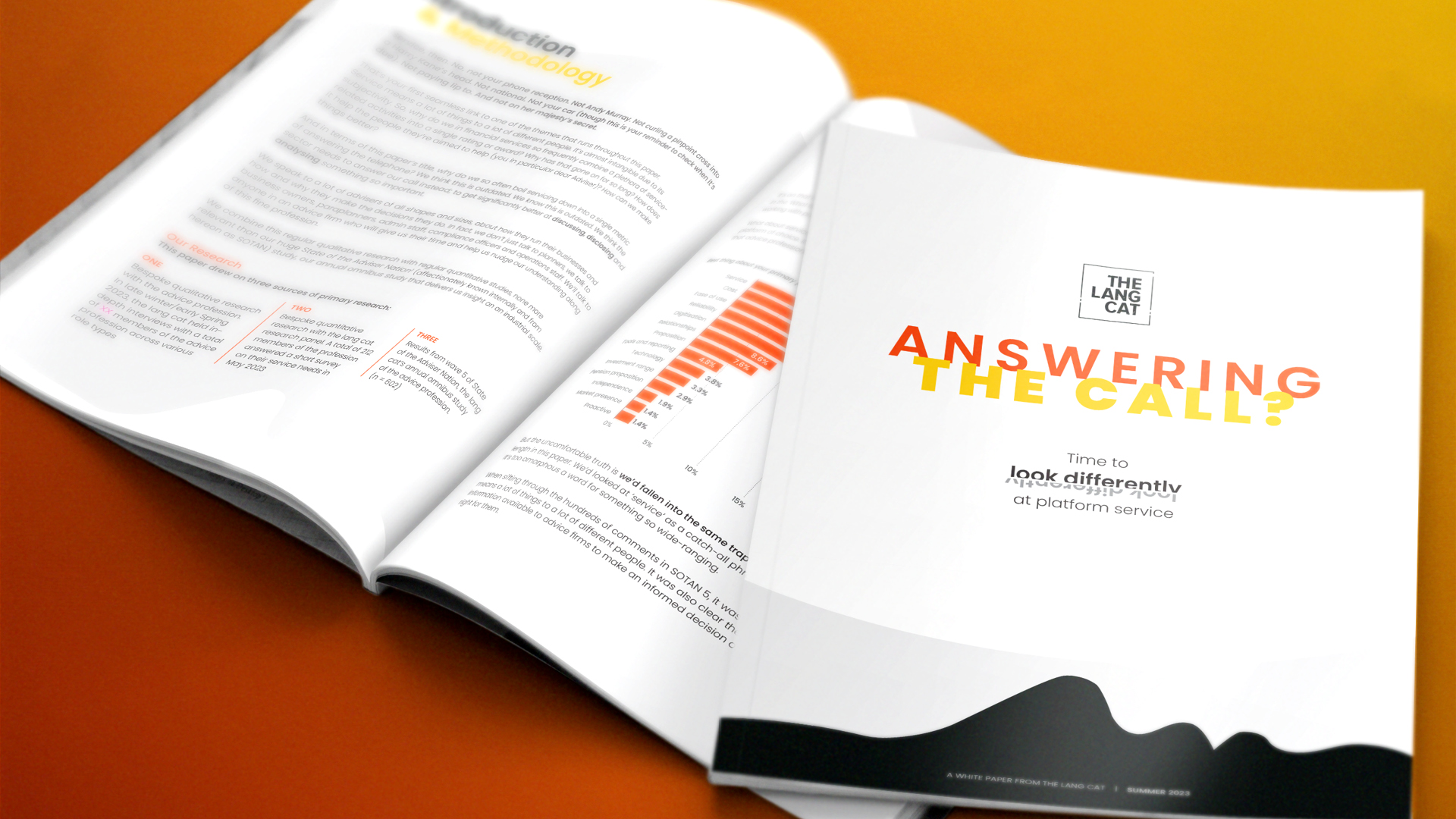
Right. Let’s talk about service. Our pals at Parmenion down in the warm, wet South West of Englandshire have published their third paper on the impact of poor platform service, and once again we’ve been allowed to come and play and do the research that sits behind it. Here’s a writeup from Momodou.
Last year’s report was pretty depressing reading; no improvement on the year before and much grumpiness all round. This year’s is a bit better. Fewer advisers say service has a “significant impact” on their business — 54%, down from 80% — and the weekly time lost to fixing other people’s mistakes has fallen from 5.3 hours to just over 4. Even the proportion of advisers apologising to clients has dipped, though 90% is still an extraordinary number for a sector that loves to talk about good outcomes.
The question is whether things are genuinely improving or whether everyone has simply become numb to the grind. “You get used to it being slow,” said one adviser, which I think might be a Bob Dylan lyric but is still a pretty damning indictment.
Transfers still suck. Confidence in electronic processes is rising, but most still prefer selling to cash and then transferring and then buying the same things you sold except somewhere else because at least you know what kind of pain you’re in for and that the marks will fade in time.
You want transparency: a full 90% of advisers want platforms to publish their electronic transfer connectivity. Not marketing guff. Just the truth about how things really work. (This isn’t in the report, but for my money any platform more than a few years old that isn’t investing in getting this right is going to take an Eben Etzebeth-level shot in the eye before long.)
The qualitative interviews we did for the paper reinforce what we already know: service starts and ends with people. The platforms that get it right do so because someone takes ownership, knows what they’re doing and follows through. When they don’t, advisers are left chasing forms, sitting in queues and explaining delays they didn’t cause. I loved one adviser’s comparison to Domino’s — if they can track a pizza, why can’t we track a transfer? This shouldn’t be funny, but, y’know, why not?
So yes, things look a touch better. But no one should kid themselves that we’re anywhere near good enough. Expectation is rising faster than delivery, and advisers are running out of patience for “improvement” that still leaves them losing half a day a week to nonsense.
If the sector wants next year’s report to read differently, it’s not complicated. Stop hiding the data. Empower the people who pick up the phone. Treat adviser firms like adults. And make service something you invest in, not something you make firms apologise for.
Anyway. You should read the paper. It’s pretty good, and I think you’ll recognise a lot of what’s in it.
And your music choice this week – come with me, my confreres and consoeurs, grab someone you love and sink into a swamp of prog. You will thank me, maybe. And while you’re working that out, marvel at this live version of Runaway by Marillion. I know you are time-poor and all that, but let the first 3 minutes build up and then enjoy what happens next. That’s a good time right there.