By Steve Nelson and Rich Mayor
State of the Advice Nation wave 8 paints a positive picture of advice, but at the same time points to a profession increasingly under strain.
SOTAN represents the richest, most consistent dataset we hold on the UK advice profession. Building on previous waves of insight, it gives us both a long-term view while keeping an eye on what’s happening right now.
Findings are based on around 450 responses spanning business owners, planners, paraplanners, operations and support, as well as those earlier in their advice and planning careers. As always, we’re hugely grateful to those who invest their time in completing SOTAN, and we hope the full report repays and reflects the effort that’s been put in.
We’ve put together a snapshot of some of the findings here. For the complete picture on the advice profession in all its glory, alongside the challenges it’s facing, head to the full report.
The commercials look good
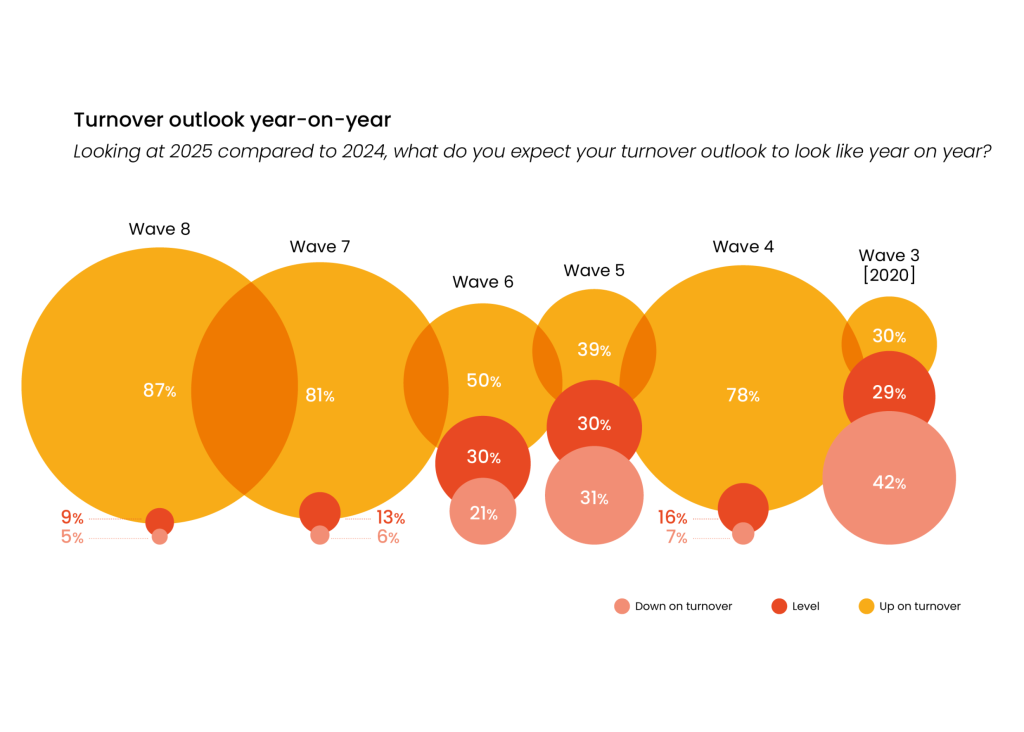
Let’s start with the good news first. This is the third year we’ve produced a report section dedicated to business owners, and it marks the best year yet in terms of financial performance.
The firms we hear from have now forecasted increasing revenue projections for the last four years, suggesting continued strong growth following the outlier year post-Covid.
The outlook on profit paints a similarly rosy picture, with 78% of firms saying they’ll be up on profit year on year. A third of those expect profit to be up by more than 20%.
BUT
When we dig a little deeper, there is a cloud to this silver lining. Asked to describe the year in a single word, ‘challenging’ comes up a lot. This is not surprising given the year advice professionals have had, from Trump tariffs to relentless Budget speculation. This, taken together with other findings, point to a sector being stretched too thin, and in danger of hitting capacity, or worse, burnout.
AI: From novelty to normality
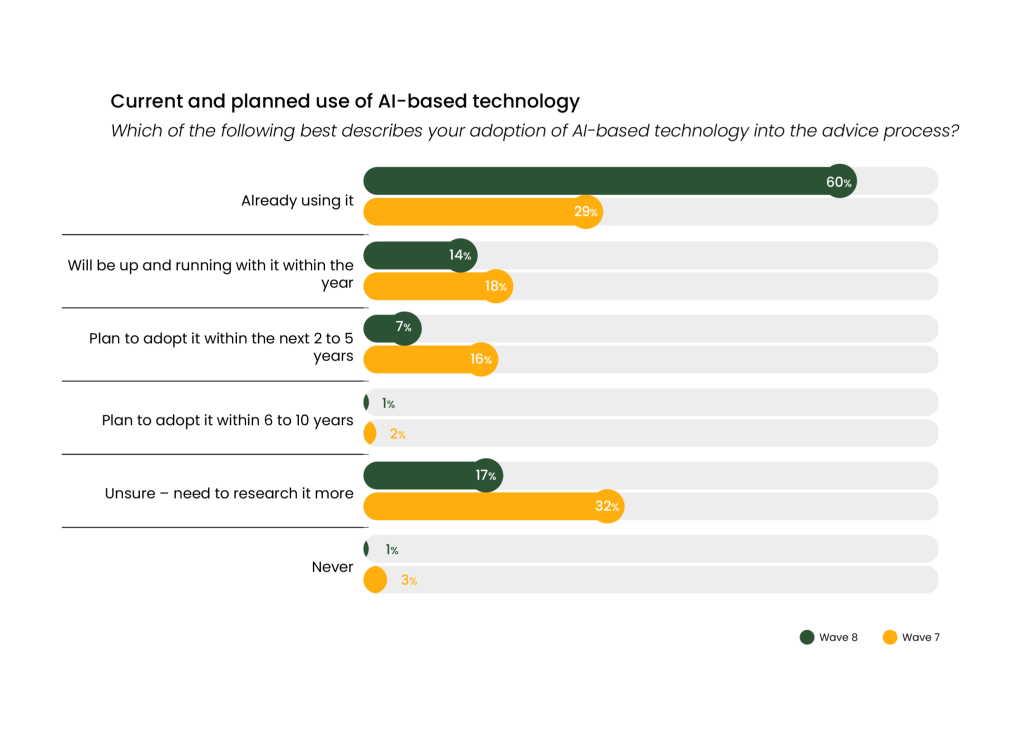
Having tracked the use of artificial intelligence in advice over the past three years, the pace of adoption is clear. While we initially asked the question a slightly different way, we can see that among respondents use of AI has gone from around 15% three years ago to 29% last year to 60% in this latest wave.
Advice firms tell us they are using AI in a number of different ways, including administration, documentation, meeting notes and data handling. Drafting and structuring reports also features, but for the purposes of first drafts rather than final recommendations.
So, use of AI tools within advice processes is high. Yet the firms that feel they have clear policies around AI and regulatory certainty around its use are in the minority. This suggests usage and behaviour on AI has outpaced governance and structure.
Capacity: The paraplanner perspective
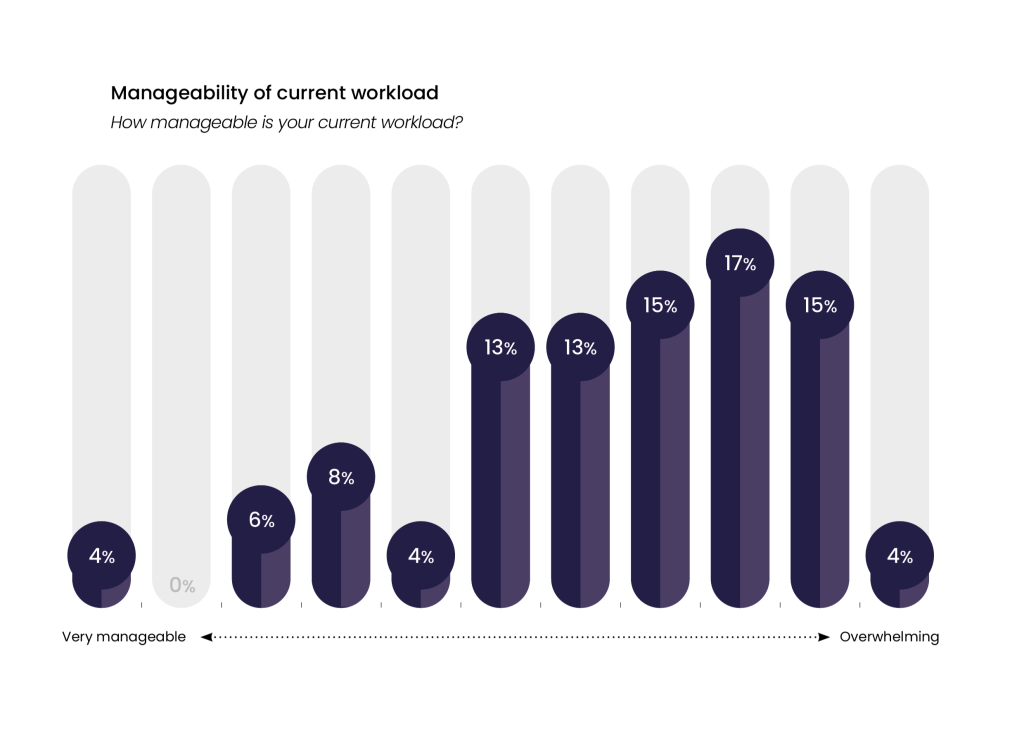
The role of the paraplanner is central to the advice process, yet paraplanners themselves tell us they don’t believe their role is clearly defined across the sector.
This feeds through into a number of challenges for paraplanners, including workload pressure.
Paraplanners we heard from tell us they believe the value of what they do lies in technical expertise and analytical thinking, yet the biggest obstacle in their day-to-day working life remains dealing with providers and provider inefficiency. Paraplanners are wearing many hats – planner, support and process manager – and are feeling the strain as a result.
New Blood
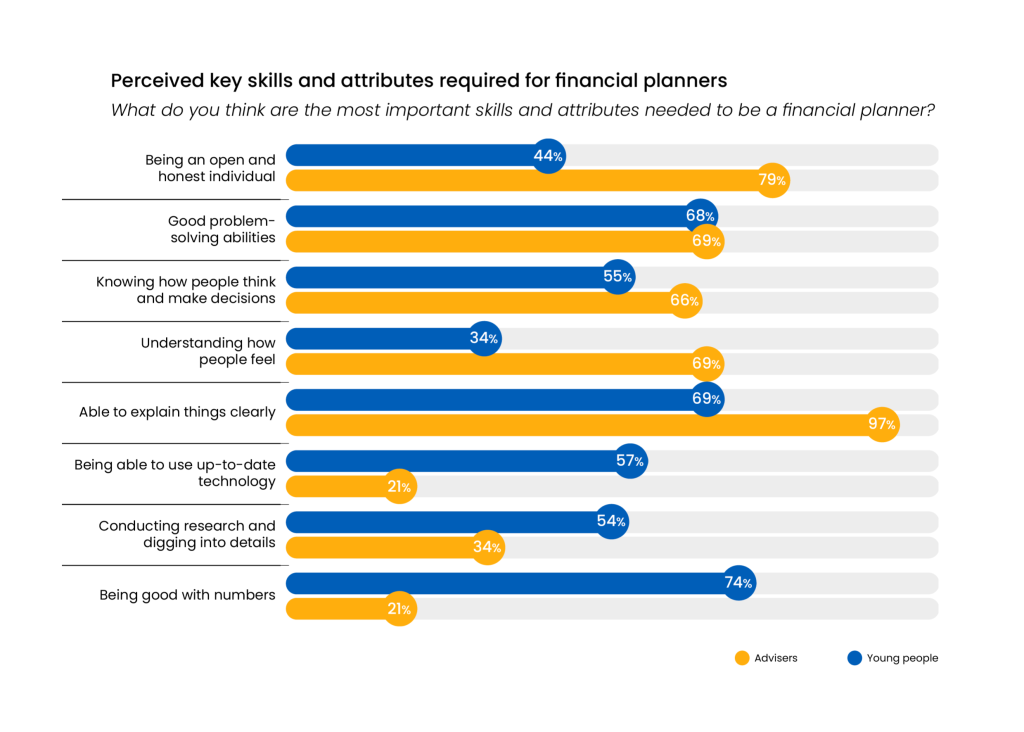
We’ve been talking about the need for new talent in advice for a while now at the lang cat, as part of our New Blood series of events and white paper.
Here we see responses to the skills needed to be a financial planner according to two different groups: the advice professionals taking part in SOTAN, and a cohort of 17–23-year-olds researched in partnership with YouGov and Morningstar Wealth.
The disconnect on things like being good at maths, understanding how people feel and being able to explain things clearly is plain to see. This perception gap can be addressed, but it will take a collective effort beyond the profession itself – an effort to raise the profile of financial planning and the value it provides, and to show those new to the profession that the door is open to ‘people like them’.
Want more SOTAN insight? We don’t blame you.
If you subscribe to our stuff or if you took part in the survey, you’ll have your copy of SOTAN already.
If you’re part of a larger organisation that works with the advice profession, get in touch with the insight team to get hold of a copy, and for more on how we can best support your business.
And if you’re a member of the advice profession and want to participate in research like SOTAN in future, the way to do that is to join our over 1,600-strong lang cat panel.