I’m not talking about the cup final. 11 days is still too soon.
Today I want to talk about the uncanny valley.
For the uninitiated, and look, no judgement, we can’t all have spent formative years with a botched Computer Science degree, the uncanny valley is a concept from the 1970s, coined by Japanese roboticist Masahiro Mori.
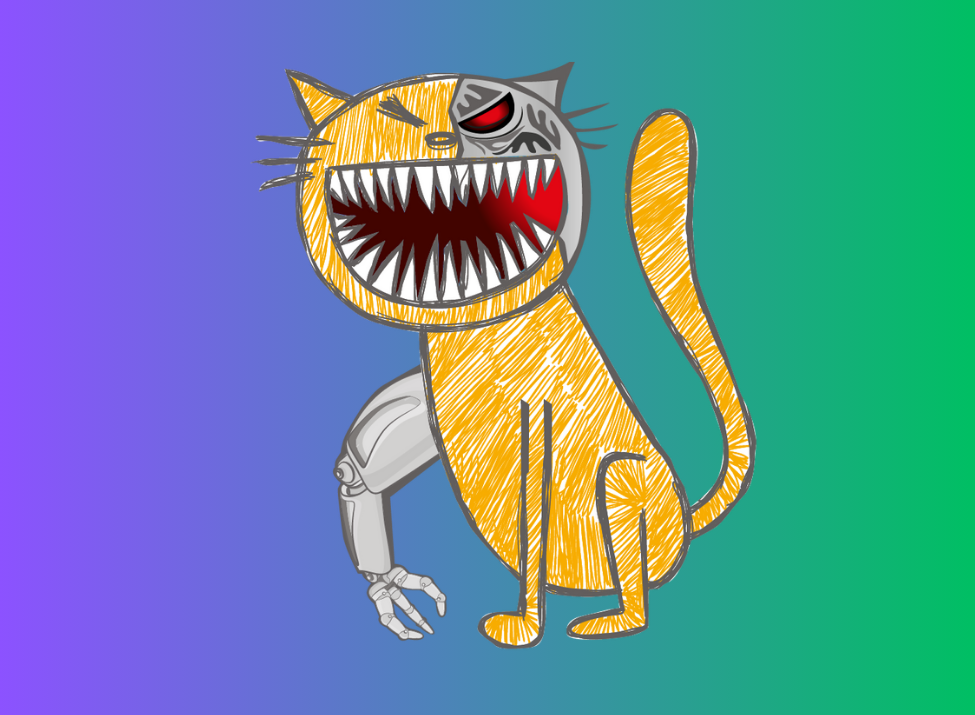
The basic idea is this: as robots or computer-generated figures become more humanlike, we find them more appealing. Up to a point. Then something goes wrong. When they get almost human but not quite, something in our lizard brain recoils. The face is a bit too still. The smile doesn’t reach the eyes. It’s familiar enough to register as human, and wrong enough to make your skin crawl. Think early CGI Tom Hanks in The Polar Express. You know exactly what I mean.
We have arrived at the uncanny valley of professional writing.
You’ve seen it. I know you have, because you’re reading a financial services newsletter and you are therefore a person who reads things, which puts you in an increasingly niche demographic. It’s the LinkedIn post that opens with “In today’s rapidly evolving landscape…” It’s the trade press article where every paragraph is exactly the same length. It’s the thought leadership piece that makes seventeen points and says nothing, structured with the eerie confidence of something that has read one million documents and understood none of them. It flows. It is grammatically impeccable. It has the same relationship to human thought that The Polar Express Tom Hanks has to an actual face.
It is almost writing.
Here’s where I have to get uncomfortable with myself for a minute.
Why does this bother me, exactly? I use AI tools. Most people I respect use AI tools. The lang cat is figuring out how best to use AI tools. So, what’s the actual objection? Is it the laziness? The not-even-trying-to-hide-it-ness of it? Or is it something more self-serving, that I’m just annoyed that I’m getting older while the world moves around me?
A colleague made a point recently that’s been rattling around in my head. We’ll happily wear whatever we like on a normal Tuesday, but the moment there’s an external meeting, out comes the smart jacket. A client calls and we shave off some of the Fife or Leith from our accents. Nobody told us to. We just know. There’s something performative about professional life that we’ve all silently agreed to, and we don’t particularly interrogate it. So why is AI-assisted writing different? Why does the output need to visibly bear the marks of human endeavour to feel legitimate, when half of what we do professionally is performance anyway?
And maybe that’s the actual question for our wee corner of financial services. Does it matter? Probably depends where you’re standing. If you’re writing to a client about their retirement, their money, their future, yeah, I think it matters quite a lot that a human being actually thought that through. The stakes are real and the relationship is real and the uncanny valley feeling is going to land badly at exactly the wrong moment. But the LinkedIn post about your firm’s exciting new hire? The update that fourteen people will skim on a Thursday morning? Genuinely not sure the soul content is the critical factor there. The problem is nobody’s agreed where the line sits between those two things, or who gets to draw it. The FCA aren’t rushing out guidance on authenticity of tone. It’s just vibes, and vibes are a terrible regulatory framework.
Where do you even draw the line? If I take an AI draft and rewrite most of it, is that fine? What if I rewrite some of it? What if I just fix the punctuation, remove the telltale signs and add a Fife reference? At what point does the human edit redeem the machine origin? And why, philosophically, are my grubby fingerprints on something inherently worth more than the clean, frictionless version it started as?
I don’t have a clean answer. I’m not sure anyone does. We’ve a lot of figuring out to do.
I reckon what we’re actually arguing about, when we argue about whether AI writing has a soul, is whether writing itself has a soul. We’re poking at what makes something authentically human.
Have I become the meme? Am I the old man shouting at clouds? Possibly. There’s a very clear version of this story where I’m a buggy-whip manufacturer in 1910, furious about motorcars, writing a newsletter about the spiritual inadequacy of internal combustion. The kids are fine. The writing will be fine. The tools change, the humans adapt, the LinkedIn posts remain terrible for entirely new reasons.
And yet.
There’s something. I can’t fully articulate it, but when I read something and it lands, actually lands, makes me laugh or think or feel briefly less alone in some industry-specific frustration. I want to believe that’s a transaction between two people. That someone sat with something uncomfortable long enough to find the funny in it, or the true thing buried under the obvious thing. That the Dunfermline joke isn’t just there because a language model learned that self-deprecating regional specificity scores well for authenticity metrics.
Which brings me, finally, to a disclosure.
I used AI to write some of this. Or I used it to write none of it. Or I used it to write all of it and then added the bit about the cup final as a human watermark, because I know that’s the thing you’d look for.
Which is it? Can you guess? Are you reading it differently now, scrolling back up, looking for the seams? Do you feel differently?
And more importantly, does that mean I’m wrong about all of the above? Or does it mean the question was never really about the tool? Like I said, we’ve a lot of figuring out to do.
I genuinely don’t know. And I find that more interesting than anything else I’ve written in a while. Whether I wrote it or not.